
Darjeeling Travel Guide: Everything You Need to Know
By Indra Travels — crafting Himalayan holidays for over 5 years
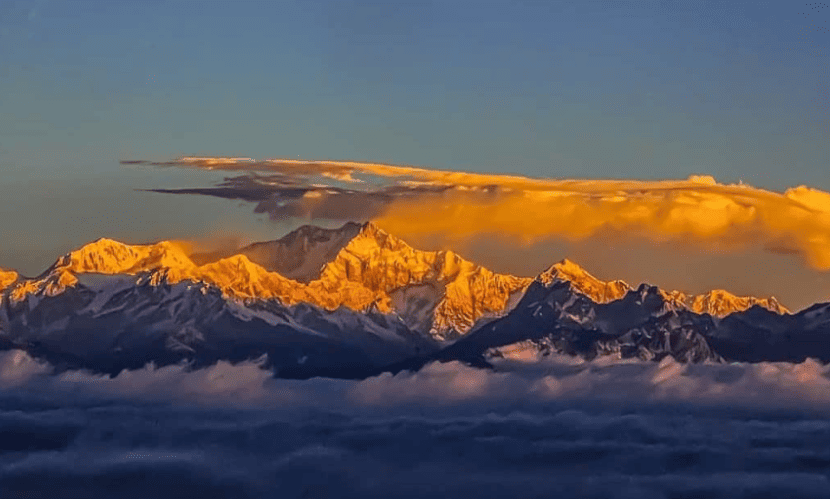
At Indra Travels, we’ve been designing tour packages to the Eastern Himalayas for more than five years now, and if there’s one destination that never stops surprising even our most seasoned travellers, it’s Darjeeling. This Darjeeling travel guide isn’t put together from a desk in some other city — it comes from our own guides who’ve walked Mall Road at 5 a.m.
for Tiger Hill pickups, negotiated toy train tickets during peak season, and rebooked entire itineraries when the hill mist decided to roll in a day early. Consider this your complete, no-fluff Darjeeling travel guide, written by people who actually run tour packages here every single week.
Whether you’re planning a honeymoon in the clouds, a family trip to see the toy train, or a solo trek toward Sandakphu, this Darjeeling travel guide will walk you through everything — when to go, how to get there, what to see, where to eat, and the small details most generic blogs leave out.
Why Darjeeling Deserves a Spot on Your Travel List
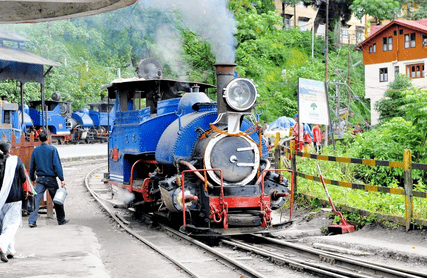
Darjeeling sits at roughly 2,050 metres in the Lesser Himalayas, in the northern hills of West Bengal. It’s famous for three things: its tea, its views of Kangchenjunga (the world’s third-highest peak), and the Darjeeling Himalayan Railway — a UNESCO World Heritage narrow-gauge line that has been climbing these hills since 1881. Any proper Darjeeling travel guide has to start here, because these three elements shape almost every experience you’ll have in town.
What makes Darjeeling different from other hill stations we sell tour packages for — Shimla, Manali, Munnar — is the sheer density of experiences packed into a small town. You can sip a cup of first-flush tea grown a few hundred metres from where you’re standing, ride a 140-year-old steam engine around a spiral loop, and watch the sun hit snow-capped peaks — all before breakfast. That’s the kind of morning our clients write home about, and it’s why this Darjeeling travel guide exists: to help you plan those mornings properly instead of leaving them to chance.

Best Time to Visit: What This Darjeeling Travel Guide Recommends
We get asked this more than anything else, so let’s settle it clearly in this Darjeeling travel guide.
- March to May (Spring): Clear skies, blooming rhododendrons, excellent mountain visibility. This is peak season, and our tour packages get booked out fast for this window.
- June to September (Monsoon): Heavy rain, frequent landslides on the hill roads, and low visibility. We generally advise clients to avoid this stretch unless they specifically want the lush, misty, moody Darjeeling.
- October to December (Autumn): Our personal favourite window and the one we push hardest in every Darjeeling travel guide we write. Post-monsoon skies are crisp, Kangchenjunga is almost always visible, and the weather is comfortable for walking tours.
- January to February (Winter): Cold, occasionally with light snowfall in town. Beautiful for photography, but pack heavily — temperatures can drop close to freezing at night.
If sunrise views of Kangchenjunga from Tiger Hill are your priority, aim for October to early December or March to April. Any Darjeeling travel guide worth reading should tell you plainly: monsoon months are the one time we actively discourage clients from booking.
How to Reach Darjeeling
There’s no airport or broad-gauge railway station directly in Darjeeling, so getting there is part of the adventure — and part of what makes a good Darjeeling travel guide genuinely useful.
By Air: The nearest airport is Bagdogra (IXB), roughly 90 km away, connected to Delhi, Kolkata, Mumbai, and Bengaluru. From Bagdogra, it’s a 3–4 hour drive up into the hills, and this is the route Indra Travels uses for almost all of our fly-in packages.
By Rail: New Jalpaiguri (NJP) is the nearest major railhead, well connected to Kolkata, Delhi, and other major cities via overnight trains. From NJP, you can take a shared jeep, private cab, or — if you have time and patience — the full 88-kilometre toy train journey, which takes 7 to 8 hours, and is more of a heritage experience than practical transport. Most of our clients instead take a 3-hour road transfer and save the toy train for a shorter joy ride once they’re already in Darjeeling.
By Road: Darjeeling is well connected by hill roads from Siliguri and Gangtok. From Kolkata, it’s roughly 600 km, generally covered as an overnight train to NJP followed by a road transfer, rather than a straight drive.
Any complete Darjeeling travel guide should stress this: book your hill transfers in advance during peak season, because taxis and shared jeeps fill up fast, especially around Puja holidays and Christmas week.
Top Places to Visit — The Core of This Darjeeling Travel Guide
1. Tiger Hill Sunrise
No Darjeeling travel guide is complete without Tiger Hill. Located about 11 km from town, it’s the classic spot for watching the first light hit Kangchenjunga. Our guides arrange pickups around 4 a.m. so you’re settled in before the crowds — and yes, there will be crowds, especially in peak season.
2. The Darjeeling Himalayan Railway (Toy Train)
This UNESCO-listed narrow-gauge railway is the heart of every Darjeeling travel guide worth its salt. The short joy ride from Darjeeling station to Ghum and back passes through the famous Batasia Loop, where the track spirals around a war memorial garden with sweeping mountain views. Demand for tickets is high, so we always book these a day or two in advance for our travellers.
3. Batasia Loop
Built in 1919 to help the toy train manage the steep gradient near Ghum, Batasia Loop is now one of the most photographed spots in town, with a well-kept garden, a war memorial honouring Gorkha soldiers, and 360-degree Himalayan views.
4. Padmaja Naidu Himalayan Zoological Park
Spread across roughly 67 acres, this is the largest high-altitude zoo in India and home to snow leopards, red pandas, and Tibetan wolves. It’s a highlight in almost every family-focused Darjeeling travel guide, and it’s usually combined with the Himalayan Mountaineering Institute next door.
5. Himalayan Mountaineering Institute (HMI)
Founded in memory of Tenzing Norgay, HMI houses a mountaineering museum with equipment used on historic Everest expeditions. It pairs naturally with the zoo visit on the local sightseeing circuit.
6. Tea Estates
You cannot write a genuine Darjeeling travel guide without dedicating real space to tea. Estates like Happy Valley are open for guided walks where you can see the plucking, withering, and rolling process, followed by a tasting session. We recommend picking one estate rather than rushing through several — the experience is about slowing down.
7. Ghum Monastery and Observatory Hill
For a quieter side of town, Ghum Monastery (Yiga Choeling) is one of the oldest Tibetan Buddhist monasteries in the region, while Observatory Hill offers panoramic views and a mix of Hindu and Buddhist shrines.
8. Mall Road and Chowrasta
The social heart of Darjeeling, lined with cafes, souvenir shops, and the iconic Keventer’s for breakfast. Every Darjeeling travel guide should mention this as the easiest place to simply wander in the evening.
9. Rock Garden and Ganga Maya Park
About 10 km from town, this terraced garden built around the Chunnu waterfall is a favourite picnic spot, popular with families and couples looking for a slower afternoon away from the main sightseeing loop.
10. Peace Pagoda
A serene Japanese Buddhist pagoda offering quiet reflection and clear valley views — a good stop for travellers who want a calmer counterpoint to the busier attractions.
[IMAGE PROMPT: Tourists at Tiger Hill viewpoint at dawn, silhouettes against a golden-pink sky, snow-capped Kangchenjunga range visible in the distance]
Sample Itinerary from Indra Travels
Because we run tour packages here year-round, we’ve refined this into the flow that works best for most travellers. This is the backbone of our most-booked Darjeeling travel guide itinerary.
Day 1: Arrive via Bagdogra or NJP, drive up to Darjeeling, evening at leisure on Mall Road.
Day 2: Early Tiger Hill sunrise, breakfast back at the hotel, followed by the local 7-point sightseeing tour covering the zoo, HMI, ropeway, Lebong Race Course, Happy Valley Tea Estate, and Tibetan Self Help Refugee Centre.
Day 3: Toy train joy ride to Ghum via Batasia Loop, afternoon free for shopping and cafe-hopping around Chowrasta.
Day 4: Optional day trip to Mirik or Kalimpong, or an extra tea estate visit, before departure.
For trekkers, we extend this itinerary further toward Sandakphu, but that deserves its own separate Darjeeling travel guide entirely given the permits and physical preparation involved.
Where to Stay
Darjeeling has accommodation across every budget, and this is one area where our Darjeeling travel guide differs from generic listings — because room location matters here more than almost anywhere else in India. Hotels closer to Chowrasta and Mall Road offer walkability but can be noisy during peak season. Properties slightly outside town, especially toward Jorbunglow or Lebong, offer quieter mountain views but need a short cab ride for sightseeing. We match this to each traveller’s pace when we build a tour package — early risers heading to Tiger Hill benefit from staying closer to the taxi stand.
What to Eat
Any honest Darjeeling travel guide has to talk about food, because it’s a real highlight, not an afterthought. Try:
- Momos — steamed or fried, found on nearly every corner
- Thukpa — a warming noodle soup, perfect for the cold evenings
- Darjeeling tea — obviously, and best bought directly from an estate rather than a tourist shop
- Sael Roti — a traditional Nepali rice-flour ring bread, often eaten at breakfast
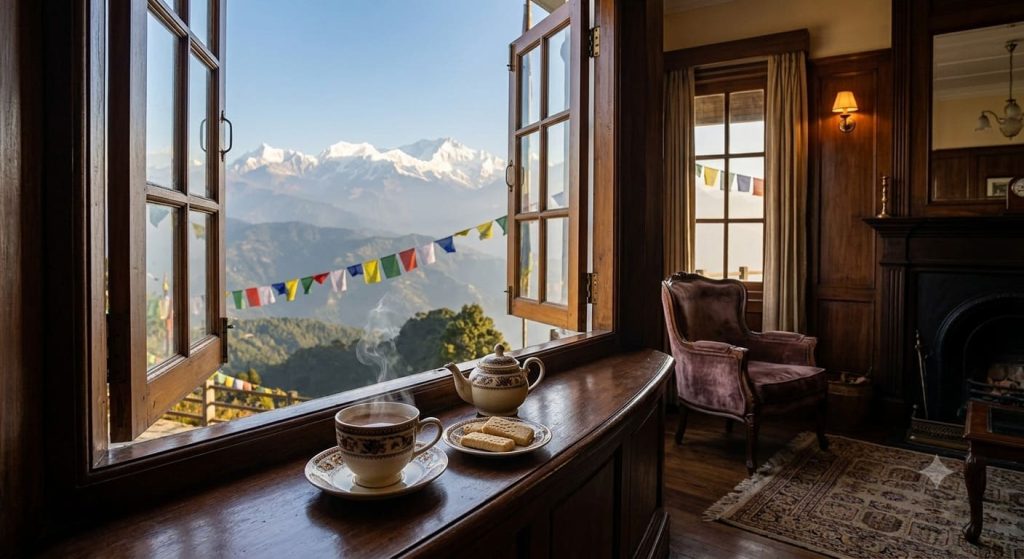
- Bakery items at Keventer’s and Glenary’s — colonial-era bakeries that are now Darjeeling institutions
Practical Tips from Our Guides
A few things we tell every client before they travel, and things every Darjeeling travel guide should mention but often skips:
- Altitude and weather shifts fast. Layer your clothing even in summer months — mornings and evenings get cold regardless of season.
- Book toy train tickets early. During peak season, seats sell out days in advance.
- Carry cash. Card acceptance is inconsistent outside the main hotels and larger shops.
- Permits for Sikkim border areas. If you’re combining Darjeeling with Sikkim, foreign nationals need an Inner Line Permit, arranged easily through your travel agent.
- Avoid monsoon travel if mountain views are your priority — landslides can also disrupt hill road transfers.
- Respect local culture. Darjeeling is home to Nepali, Bhutia, Lepcha, and Tibetan communities — monasteries and religious sites should be visited with appropriate dress and behaviour.
Shopping in Darjeeling
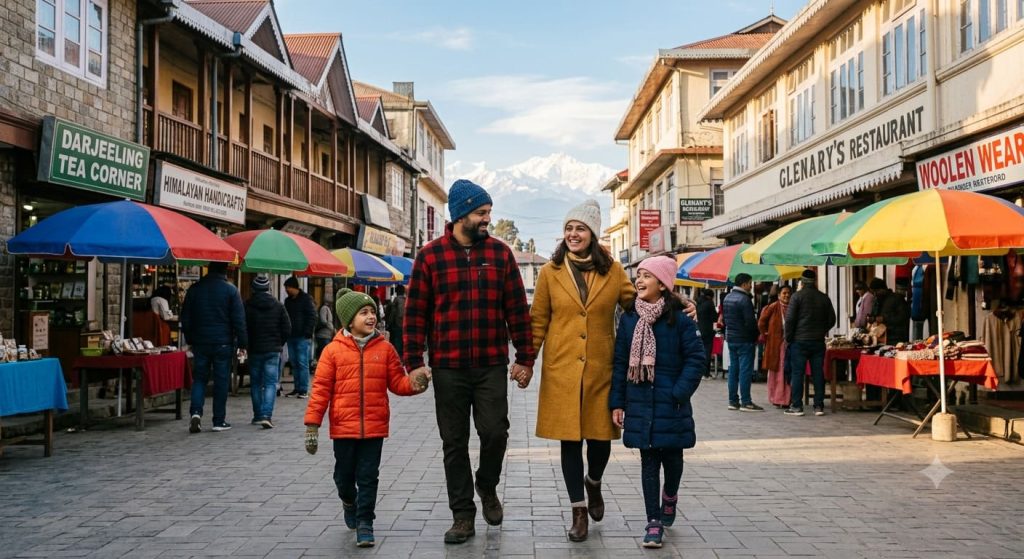
No Darjeeling travel guide is complete without a word on shopping, because this is where a lot of travellers end up spending an unplanned extra hour or two. Chowrasta and the lanes around Mall Road are lined with shops selling hand-knitted woollens, Tibetan curios, prayer flags, and hill-station handicrafts. But the real shopping highlight — and the one thing we push hardest in every Darjeeling travel guide we hand our clients — is tea. Skip the generic tourist shops near the taxi stand and instead buy directly from an estate outlet or a reputed tea house on Nehru Road, where you can taste before you buy and get an honest sense of first flush versus second flush leaves. A good rule we give travellers: budget an extra 30–45 minutes at the end of your tea estate visit purely for this, because rushing the tea-buying experience is one of the most common regrets we hear about after a trip.
Darjeeling’s markets also stock locally made chocolates, wooden handicrafts from Nepal and Bhutan, and warm Nepali topis (caps) that make for genuinely useful souvenirs given how cold the evenings get. Bargaining is expected in the smaller stalls but less common in the established tea houses and bakeries.
Weather and Packing Checklist
Because temperatures swing dramatically between morning and midday in Darjeeling, packing right matters more here than in most Indian hill stations. Every Darjeeling travel guide should include a proper checklist, so here’s ours, refined over five years of client feedback:
- Layered clothing — a base layer, a warm middle layer, and a windproof or waterproof outer layer, regardless of season
- A good pair of walking shoes — much of the sightseeing involves uneven, sloped terrain
- Sunscreen and sunglasses — the sun at this altitude is stronger than it looks, even on cool days
- A reliable torch or headlamp — useful for the pre-dawn Tiger Hill departure
- Basic medication for altitude discomfort — Darjeeling’s elevation is moderate, but sensitive travellers can still feel it
- A refillable water bottle — many hotels and cafes now support refills, cutting down on plastic waste
- Cash in small denominations — for tea purchases, monastery donations, and smaller vendors
Who Should Visit Darjeeling
We design different tour packages depending on the traveller, and this Darjeeling travel guide would be incomplete without a quick note on who each trip suits:
- Honeymooners love the quieter tea estate stays and sunset points away from the main crowds.
- Families get the most out of the zoo, HMI, and toy train combination.
- Trekkers use Darjeeling as the launch point for Sandakphu and Singalila Ridge treks.
- Tea enthusiasts should plan at least one full day dedicated purely to estate visits and tastings.
- Solo travellers find Darjeeling easy to navigate, with a walkable town centre and a strong backpacker cafe culture.
Final Word from Indra Travels
We’ve written and rewritten this Darjeeling travel guide over the years as the town itself has changed — new vista dome coaches on the toy train, new cafes on Mall Road, shifting monsoon patterns that push our recommended travel windows around slightly each year. But the core of what makes Darjeeling special hasn’t moved: the tea, the trains, and that first glimpse of Kangchenjunga at sunrise.
If you’d rather not manage the toy train bookings, hill transfers, and Tiger Hill timings yourself, that’s exactly what our tour packages are built for. This Darjeeling travel guide gives you the map — Indra Travels can help you walk it, with itineraries built around whichever version of Darjeeling you’re chasing: the quiet tea-estate escape, the family sightseeing trip, or the trekker’s gateway into the higher Himalayas.
Reach out to us whenever you’re ready to turn this Darjeeling travel guide into an actual booking — we’ve got the local contacts, the timing figured out, and five years of trial and error already done for you.