
Darjeeling & Sikkim Tour: Complete Itinerary Guide
If you’re dreaming of misty mountains, cascading waterfalls, monasteries wrapped in prayer flags, and cups of world-famous tea sipped with a Kanchenjunga backdrop, a Darjeeling Sikkim tour should be at the top of your travel list. This corner of Northeast India packs an extraordinary variety of landscapes and cultures into a relatively small area, making it one of the most rewarding trips you can plan in the Eastern Himalayas.
In this guide, we’ll walk you through a complete, practical itinerary for a Darjeeling and Sikkim tour — covering everything from the best time to visit, day-by-day travel plans, permits you’ll need, budget estimates, and insider tips to make your trip smooth and memorable.
Whether you have 5 days or 10, this guide will help you build the perfect Darjeeling Sikkim itinerary tailored to your pace and interests.
Table of Contents
- Why Choose a Darjeeling Sikkim Tour
- Best Time to Visit Darjeeling and Sikkim
- How to Reach Darjeeling and Sikkim
- Permits Required for Sikkim
- Complete 7-Day Darjeeling Sikkim Itinerary
- Places to Visit in Darjeeling
- Places to Visit in Sikkim
- Budget Estimate for the Trip
- Where to Stay
- Travel Tips for a Smooth Trip
- Frequently Asked Questions
Why Choose a Darjeeling Sikkim Tour
Darjeeling and Sikkim sit right next to each other in the lower Himalayas, which makes it easy to combine both destinations into a single trip. Darjeeling is famous for its colonial charm, toy train rides, and tea gardens, while Sikkim offers dramatic mountain views, Buddhist monasteries, alpine lakes, and some of the friendliest hill towns in India.
Together, they offer a complete Himalayan experience — culture, nature, adventure, and relaxation — without the long distances or high costs associated with trips to Ladakh or Nepal. A well-planned Darjeeling Sikkim tour typically takes 6 to 8 days, giving you enough time to explore both regions without rushing.
Best Time to Visit Darjeeling and Sikkim
Choosing the right season can make or break your trip, since weather in the mountains changes quickly.
- March to May (Spring): Pleasant weather, blooming rhododendrons, and clear mountain views. Ideal for sightseeing and photography.
- June to September (Monsoon): Heavy rainfall, frequent landslides, and cloud cover that can block mountain views. Best avoided unless you enjoy lush greenery and don’t mind travel disruptions.
- October to December (Autumn): The most popular season. Skies are crystal clear, temperatures are cool but comfortable, and Kanchenjunga is visible almost every morning.
- December to February (Winter): Cold, with occasional snowfall in places like Lachung and Yumthang Valley. Great for travelers chasing snow, but some high-altitude roads may close.
For most travelers, October to mid-December offers the best combination of clear skies, comfortable weather, and open roads — making it the top recommendation for a Darjeeling Sikkim tour.
How to Reach Darjeeling and Sikkim
By Air: The nearest airport is Bagdogra Airport (IXB), well connected to Delhi, Mumbai, Kolkata, and Bengaluru. From Bagdogra, Darjeeling is about 3 hours by road, and Gangtok is roughly 4 hours.
By Train: New Jalpaiguri (NJP) is the nearest major railway station, connected to most Indian cities. Shared taxis and pre-booked cabs are readily available from NJP to Darjeeling or Gangtok.
By Road: Both Darjeeling and Gangtok are well connected by road from Siliguri, which acts as the gateway to the entire region. Shared jeeps, private cabs, and buses all operate frequently on this route.
Permits Required for Sikkim
Unlike Darjeeling, which requires no special permit for Indian citizens, Sikkim has certain restricted zones that need documentation.
- Inner Line Permit (ILP): Required for all Indian tourists entering Sikkim. It’s free and can be obtained online or at check posts in Rangpo or Melli, or in Gangtok.
- Protected Area Permit (PAP): Required for foreign nationals visiting Sikkim, arranged through a registered travel agent.
- Restricted Area Permit (RAP): Needed for high-altitude areas like Nathula Pass, Tsomgo Lake, Yumthang Valley, and Gurudongmar Lake. Your hotel or local tour operator usually arranges this using your ID proof and photographs.
Carry at least 4-5 passport-size photographs and photocopies of your ID proof, as these are needed at multiple checkpoints during your Sikkim leg of the tour.
Complete 7-Day Darjeeling Sikkim Itinerary
Here’s a practical, tried-and-tested itinerary that balances sightseeing with travel time.
Day 1: Arrival in Darjeeling
Fly into Bagdogra or take a train to NJP, then drive up to Darjeeling (around 3 hours). Spend the evening acclimatizing to the altitude, strolling along Mall Road, and enjoying a cup of authentic Darjeeling tea. Check into your hotel and rest well for an early start the next day.
Day 2: Sunrise at Tiger Hill and Darjeeling Sightseeing
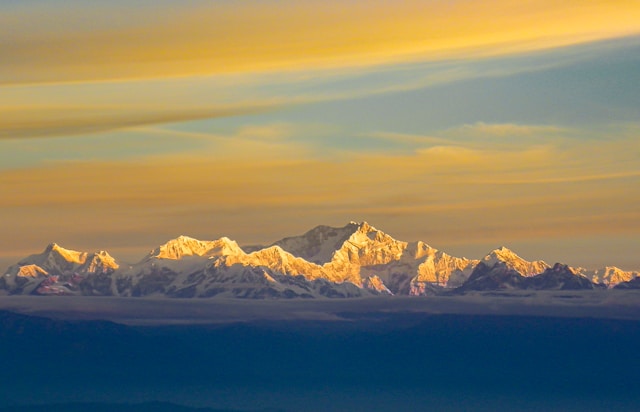
Show Image Sunrise over Kanchenjunga as seen from Tiger Hill, Darjeeling
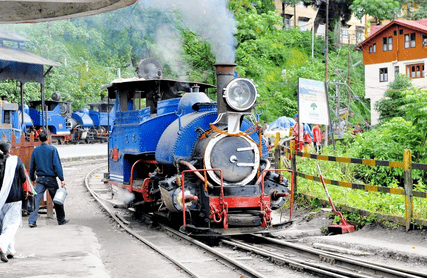
Wake up before dawn (around 4 AM) to catch the sunrise over Kanchenjunga from Tiger Hill — one of the most iconic experiences on any Darjeeling Sikkim tour. Afterward, visit Ghum Monastery and take a short ride on the UNESCO-listed Darjeeling Himalayan Railway, popularly called the “Toy Train.”
Show Image The iconic Darjeeling Himalayan Railway toy train at Batasia Loop
In the afternoon, explore:
- Padmaja Naidu Himalayan Zoological Park
- Himalayan Mountaineering Institute
- Peace Pagoda
- Batasia Loop
Day 3: Tea Garden Visit and Drive to Gangtok
Start the day with a visit to a local tea estate, such as Happy Valley Tea Estate, to learn how Darjeeling tea is grown and processed. Later, check out and drive towards Gangtok, the capital of Sikkim (around 4-5 hours). Complete your ILP formalities en route at the Rangpo check post. Settle into your Gangtok hotel by evening and explore the vibrant MG Marg for dinner and local shopping.
Day 4: Gangtok Local Sightseeing
Spend the day exploring Gangtok’s highlights:
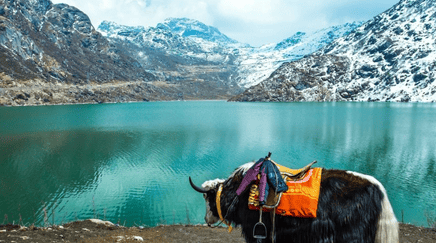
- Tsomgo Lake (Changu Lake) — a glacial lake at over 12,000 feet
- Baba Mandir — a revered war memorial shrine
- Nathula Pass (permit required, subject to weather and army clearance) — the historic trade route connecting India and Tibet
Show Image Tsomgo Lake (Changu Lake), one of Sikkim’s most visited glacial lakes
In the evening, visit the Ganesh Tok and Hanuman Tok viewpoints for panoramic views of the Gangtok valley.
Day 5: Gangtok to North Sikkim (Lachung)
Head towards North Sikkim, one of the most scenic stretches of the entire trip. The road winds through dramatic gorges alongside the Teesta River. Reach Lachung by evening and stay overnight in this quiet mountain village surrounded by apple orchards and pine forests.
Day 6: Yumthang Valley — The Valley of Flowers
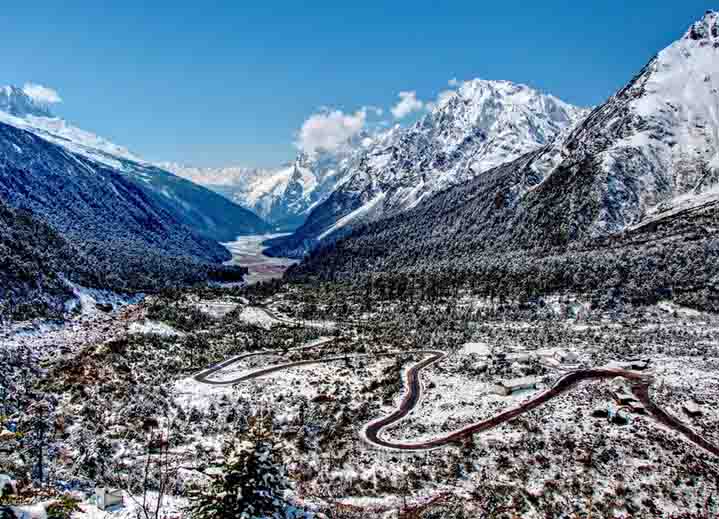
Start early for Yumthang Valley, often called the “Valley of Flowers of Sikkim,” known for its hot springs and seasonal blooms of primulas and rhododendrons. If conditions allow, continue to Zero Point for close-up views of snow-capped peaks. Drive back to Gangtok by evening.
Show Image Yumthang Valley, North Sikkim — famous for its rhododendron blooms and hot springs
Day 7: Departure
Depending on your flight or train timing, use the morning for last-minute shopping at Lal Bazaar or a relaxed breakfast with mountain views. Transfer to Bagdogra Airport or NJP railway station for your onward journey, wrapping up a memorable Darjeeling Sikkim tour.
Note: If you have extra days, consider adding Pelling and Ravangla in West Sikkim to see the Pemayangtse Monastery, Skywalk Glass Bridge, and Buddha Park.
Places to Visit in Darjeeling
- Tiger Hill – Best spot for sunrise views over Kanchenjunga
- Darjeeling Himalayan Railway – A UNESCO World Heritage toy train experience
- Batasia Loop – A spiral railway track with a war memorial and garden
- Peace Pagoda – A serene Japanese Buddhist temple
- Tea Gardens – Happy Valley and Makaibari estates offer guided tours
- Padmaja Naidu Himalayan Zoological Park – Home to red pandas and snow leopards
Places to Visit in Sikkim
- MG Marg, Gangtok – A pedestrian-only street with cafes and shops
- Tsomgo Lake – A stunning high-altitude glacial lake
- Nathula Pass – Historic Indo-Tibet border crossing
- Yumthang Valley – Alpine meadows and hot springs in North Sikkim
- Rumtek Monastery – One of the largest monasteries in Sikkim
- Pelling – Home to the Skywalk and views of Kanchenjunga
- Gurudongmar Lake – One of the highest lakes in the world (for the adventurous)
Budget Estimate for the Trip
Costs can vary based on season, hotel category, and mode of travel, but here’s a rough estimate per person for a 7-day trip:
| Category | Budget (INR) | Mid-Range (INR) | Luxury (INR) |
|---|---|---|---|
| Accommodation | ₹6,000–8,000 | ₹12,000–18,000 | ₹25,000+ |
| Local Transport/Cabs | ₹5,000–7,000 | ₹7,000–10,000 | ₹12,000+ |
| Food | ₹3,000–4,000 | ₹5,000–7,000 | ₹8,000+ |
| Permits & Entry Fees | ₹500–1,000 | ₹500–1,000 | ₹500–1,000 |
| Total (approx.) | ₹15,000–20,000 | ₹25,000–35,000 | ₹45,000+ |
This excludes flights or train tickets to Bagdogra/NJP, which depend on your city of origin.
Where to Stay
- Darjeeling: Stay near Mall Road or Chowrasta for easy access to viewpoints and cafes. Options range from heritage hotels to budget guesthouses.
- Gangtok: MG Marg area is ideal for first-time visitors, with plenty of restaurants and shops within walking distance.
- Lachung: Accommodation here is limited to a handful of cottages and homestays — book in advance, especially during peak season.
- Pelling (optional): Choose hotels with Kanchenjunga-facing rooms for unforgettable sunrise views.
Travel Tips for a Smooth Trip
- Book permits in advance through your hotel or a local travel agent to avoid delays at checkpoints.
- Pack layers — mornings and evenings can be quite cold even in summer, especially at higher altitudes like Lachung and Nathula.
- Carry cash — ATMs are limited once you move beyond Gangtok, particularly in North Sikkim.
- Hire local vehicles — Sikkim’s mountain roads require registered local drivers familiar with the terrain and permit checkpoints.
- Stay hydrated and acclimatize — altitude sickness can affect travelers at Tsomgo Lake, Nathula, and Yumthang Valley.
- Check road conditions — landslides can occasionally close roads during and just after monsoon season.
- Respect local customs — many sites, especially monasteries, expect modest clothing and quiet behavior.
Frequently Asked Questions
1. How many days are ideal for a Darjeeling Sikkim tour? A minimum of 6-7 days is recommended to comfortably cover both Darjeeling and East/North Sikkim without rushing.
2. Do I need a permit to visit Darjeeling? No, Darjeeling doesn’t require any special permit for Indian citizens. However, Sikkim does require an Inner Line Permit.
3. Is Nathula Pass open every day? No, Nathula Pass is generally closed on Mondays and Tuesdays, and can also close due to weather or army clearance issues. It’s best to keep a backup day in your itinerary.
4. What is the best month to see snow in Sikkim? December to February offers the best chances of snowfall, particularly in Lachung, Yumthang Valley, and Zero Point.
5. Can foreign tourists visit Sikkim? Yes, but they require a Protected Area Permit (PAP), which is arranged through a registered travel agency along with copies of their passport and visa.
6. Is it safe to travel with kids or elderly family members? Yes, though high-altitude areas like Nathula Pass and Gurudongmar Lake can be strenuous. It’s advisable to consult a doctor before undertaking such routes with young children, elderly travelers, or those with heart or respiratory conditions.
Final Thoughts
A well-planned Darjeeling Sikkim tour offers one of the most diverse Himalayan experiences in India — from heritage toy trains and tea estates to snow-capped valleys and sacred lakes. With the right season, a clear itinerary, and permits sorted in advance, this trip can be both hassle-free and unforgettable.
Use this guide as your starting framework, adjust it based on how many days you have, and don’t forget to leave a little room in your schedule for the mountains to surprise you — because in Darjeeling and Sikkim, they usually do.